
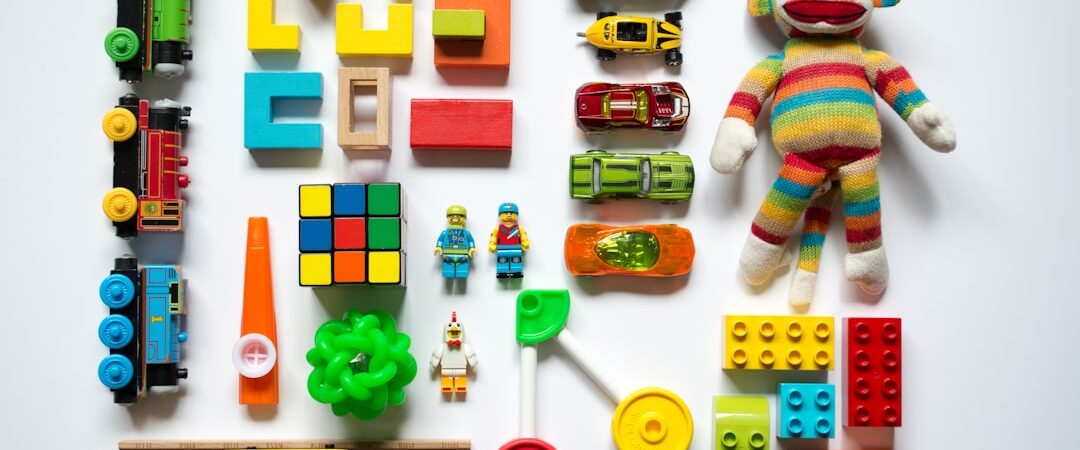
Looking for Christmas gifts that keep little hands busy and curious minds learning—without another tablet, app, or video? These screen-free gift ideas are for the kids who love stories, building, puzzles, pretend play, and figuring out how things work.
Christmas shopping for kids can feel like a balancing act. I want gifts my kids will be excited to open, but I also love finding things they can return to long after Christmas morning. As a homeschooling mom and former science teacher, I’m especially drawn to toys that make room for questions, creativity, and independent play.
And screen-free does not have to mean boring. Some of the most engaging learning happens when a child is busy building a tower, hunting for a hidden picture, listening to a story, or testing whether a homemade bridge can hold one more block.
Here are my screen-free Christmas gift ideas, organized by the kind of learner you’re shopping for. Some are specific products; others are flexible gift categories so you can choose what fits your child and your budget.
A quick note on ages: Check the exact product’s age label and safety warnings before buying, especially if younger siblings share the play space. Small magnets, batteries, and tiny construction pieces require extra care.
For Kids Who Love Stories and Listening
1. Yoto Player or Yoto Mini
If you want to give a child access to stories and music without handing over a phone, an audio player is worth considering. Yoto uses physical cards so kids can choose what to listen to themselves. The full-size Player makes sense for a bedroom or shared listening spot; the Mini is particularly handy for car rides and travel.
I love the idea of pairing a player with a few cards that match a child’s interests: animals, adventures, music, science, or favorite stories. That turns one Christmas gift into something they can keep discovering throughout the year.
Learning through play: listening comprehension, vocabulary, storytelling, independence.
Good to know: Yoto says its players are suitable for ages 3+. They use a simple pixel display, not a video screen; an adult handles initial setup and charging.
Explore Yoto players and cards
2. Toniebox and Story Characters
For a younger child who loves familiar characters, Toniebox is another audio-based gift idea. Children place a character on the player to hear stories or songs. The physical characters can make choosing a story feel like part of the play.
Choose a starter set around a character your child already loves rather than buying a large collection right away. The player and its audio figures are separate from a traditional screen, although an adult may need a phone for setup.
Learning through play: language, listening, imagination, story recall.
3. A Book Basket Built Around Their Favorite Topic
Sometimes the most useful gift isn’t a gadget at all. Pick a basket, add a cozy blanket or reading light, and fill it with books on whatever your child is currently fascinated by—dinosaurs, space, bugs, cooking, horses, or Minecraft-inspired building.
For a child learning to read, mix books they can read independently with books you can read aloud together. For an older child, add a sketchbook for drawing what they discover.
Learning through play: literacy, curiosity, conversation, subject knowledge.
For Kids Who Love to Build and Create
4. MAGNA-TILES or Other Age-Appropriate Magnetic Building Tiles
Magnetic tiles invite kids to build houses, towers, garages, castles, and whatever else they dream up. They’re also an easy way to sneak in geometry: squares, triangles, symmetry, patterns, and three-dimensional shapes show up naturally during play.
Try adding a simple challenge card: “Can you build a bridge for a toy car?” or “Can you make a tower taller than your favorite stuffed animal?”
Learning through play: spatial reasoning, design, geometry, cooperation.
Safety: Follow the age rating and inspect magnetic toys regularly; keep damaged tiles away from children.
5. Wooden Blocks and a Set of Toy Animals
Blocks might look basic compared with flashy toys, but that’s part of their appeal. Today they’re a zoo. Tomorrow they’re a farm, a road, or a city. Adding a few toy animals gives a child a reason to build and tell stories at the same time.
For toddlers, choose large, age-appropriate pieces. For older kids, add measuring tape and challenge them to build the longest road or tallest stable tower.
Learning through play: balance, measurement, pretend play, problem-solving.
6. LEGO or LEGO Technic
For a child who enjoys following detailed instructions, a LEGO set can be a satisfying project. For the child who would rather invent something, a classic assortment of bricks may offer more repeat play. Older builders who love gears and moving mechanisms may enjoy an age-appropriate Technic set.
My favorite extra gift idea: include a small notebook titled “Things I Want to Build.” It turns a building set into an ongoing creativity challenge.
Learning through play: sequencing, engineering, persistence, spatial reasoning.
7. A Maker Box with Real Art Supplies
Put together a box with construction paper, washable markers, tape, glue sticks, child-safe scissors, stamps, stickers, and recycled cardboard. The magic is that it doesn’t come with one finished result in mind.
Give it a Christmas twist with a little stack of prompts: “Design a new sleigh for Santa,” “Make a house for a tiny snowman,” or “Build a gift for your stuffed animal.”
Learning through play: planning, creativity, fine-motor skills, design.
For Kids Who Love Puzzles and Little Challenges
8. Skillmatics Search & Find Reusable Activity Mats
This is the kind of activity I like for a busy homeschool day. Children search for pictures, mark what they find, and wipe the mats clean to try again. It’s compact, repeatable, and doesn’t require setting up an entire craft project.
Look for a theme your child enjoys and check the age recommendation for the particular set.
Learning through play: visual discrimination, attention, vocabulary, fine-motor control.
9. ThinkFun Rush Hour Jr.
A child who loves figuring things out may enjoy a logic puzzle more than another toy with lights and sounds. In Rush Hour Jr., the player moves vehicles around a grid to clear a path for the target vehicle. The challenges build from simpler layouts to trickier ones.
It can also be a fun activity for an adult and child to solve together without turning it into a formal lesson.
Learning through play: planning, logical reasoning, patience, flexible thinking.
10. A Family Board Game Collection
Choose two or three games with different kinds of thinking: a matching game for a younger child, a strategy game for an older one, and a cooperative game everyone can play together.
Games give kids chances to count, explain rules, take turns, adjust plans, and practice losing graciously. That’s meaningful learning even when nobody calls it school.
Learning through play: math, communication, memory, strategy, social skills.
For Kids Who Love Science and Discovering Things
11. A Kid-Friendly Microscope
For a child who stops to inspect every bug and leaf, a microscope can make the everyday world feel brand new. Start with simple observations: a leaf, fabric, a feather, or a prepared slide designed for children.
Choose a microscope that matches the child’s age and patience level. Younger children often do better with simple controls and sturdy construction than a complicated laboratory-style kit.
Learning through play: observation, comparison, scientific questions, attention to detail.
12. A Nature Explorer Backpack
Fill a small backpack with binoculars, a magnifying glass, a notebook, colored pencils, and a child-friendly field guide. It becomes an invitation to head outside and investigate.
You can make the gift even more personal by adding a homemade “winter nature hunt” card with things to spot: animal tracks, different tree bark, bird nests, or three kinds of leaves.
Learning through play: outdoor observation, classification, drawing, curiosity.
13. A Hands-On Science Experiment Kit
Science kits are wonderful for kids who want to know why something happens. Crystal growing, simple machines, magnets, and age-appropriate chemistry projects can turn an afternoon into a memorable experiment.
Check whether the kit needs adult supervision or household supplies before wrapping it. Nobody wants to discover on Christmas morning that the fun requires an ingredient they don’t have.
Learning through play: prediction, observation, following procedures, scientific reasoning.
For Kids Who Love Pretend Play and Independent Activities
14. A Pretend Store or Play Kitchen
A pretend store can be a grocery store one day and a bakery the next. Add play food, a basket, paper price tags, and a notebook for “orders.” Older children can write menus or count pretend money while younger ones sort foods by color or category.
It’s a gift siblings of different ages may be able to use together in different ways.
Learning through play: early math, vocabulary, writing, social skills, imagination.
15. A Quiet-Time Activity Basket
Not every gift needs to be one big item. A basket with reusable activity mats, a small puzzle, a lacing toy, stickers, and a few picture books can be a practical gift for a preschooler who needs independent activities while older siblings work.
Choose a handful of items instead of filling it with clutter. Rotate them throughout the week so the basket continues to feel fresh.
Learning through play: independence, fine-motor practice, concentration, early literacy.
For more realistic ideas that fit a busy homeschool day, read How to Keep a Toddler Busy While Homeschooling Older Kids.
How I’d Choose the Right Screen-Free Gift
I’d start with the child, not the product. What do they reach for when nobody tells them what to do? Books? Blocks? Animals? Art supplies? Puzzles? That’s often a better clue than whatever toy is getting the most attention online.
- For the child who needs movement: consider an outdoor exploration kit or a building challenge that takes up floor space.
- For the child who likes quiet: try an audio player, book basket, puzzle, or reusable activity set.
- For the child who asks endless questions: choose a microscope, field guide, or science kit.
- For siblings who play together: consider blocks, magnetic tiles, pretend-play supplies, or family games.
- For a tight budget: a thoughtfully assembled book or maker basket can be just as exciting as a larger boxed toy.
Learning Doesn’t Have to Look Like School
The reason I love screen-free gifts isn’t that every minute of play needs an academic purpose. It’s that kids deserve time to make things, listen, imagine, experiment, and follow their own interests. A gift that creates room for that kind of play is doing plenty.
If you’re still shopping, browse 25 Best Educational Christmas Gifts for Kids by Age. And for a reminder that learning happens well beyond worksheets, read 25 Things That Count as Homeschooling That Don’t Feel Like School.
Product models, availability, and age recommendations may change. Review the manufacturer’s current information before buying.